When you visit Japan for the first time, you do not need to memorize every rule or understand every custom perfectly.
But there is one important idea that can help you feel much more comfortable in Japan: meiwaku.
In simple English, meiwaku means causing trouble, inconvenience, or disturbance to other people. But in Japan, it is more than just a word. It is a quiet social principle that shapes many everyday behaviors — from how people speak on trains, to how they line up, handle trash, take photos, and share public spaces.
This does not mean Japan expects visitors to be perfect. Not at all.
It simply means that if you understand the idea of not causing meiwaku, many Japanese manners will start to make more sense. And more importantly, you will feel more confident knowing how to act respectfully during your stay.
In this article, we will explain what meiwaku really means, why it matters so much in Japan, and how you can use this simple idea to travel more smoothly and comfortably.
Here is the video that inspired this article:
What Does “Meiwaku” Mean in Japan?
The Japanese word meiwaku is often translated as “trouble”, “inconvenience” or “bother”.
But in Japan, meiwaku is not just about causing a big problem. It can also mean creating a small disturbance, making someone uncomfortable, or adding unnecessary stress to the people around you.
For example, talking loudly on a quiet train, blocking a narrow sidewalk while taking photos, leaving trash behind, or ignoring a line may all be seen as forms of meiwaku.
The important point is this: meiwaku is usually about how your actions affect other people.
This idea is deeply connected to daily life in Japan. In many public places, people try to share space smoothly and quietly. They may not always say something directly, but they often notice whether someone is being considerate of others.
For visitors, this can feel a little confusing at first because many Japanese manners are not always explained clearly. You may wonder, “Why is everyone so quiet here?” or “Why are people lining up in such an organized way?”
Understanding meiwaku helps answer those questions.
It is not about strict rules for the sake of rules. It is about reducing unnecessary discomfort for others and helping everyone use shared spaces more comfortably.
So when you hear the word meiwaku, think of it as a reminder to ask:
“Could my action make things harder, louder, messier, or more stressful for someone else?”
If the answer might be yes, it is probably better to adjust your behavior a little.
That small awareness can make a big difference in Japan.
Why This Idea Matters So Much in Japan
The idea of meiwaku matters so much in Japan because many parts of daily life are built around sharing space with other people.
Japan has many busy cities, crowded trains, narrow streets, small restaurants, quiet neighborhoods, and popular tourist spots. In these places, one person’s behavior can easily affect many others.
That is why people in Japan often try to avoid actions that may disturb the flow of daily life.
For example, in Japan, people often pay attention to things like:
- keeping their voice low in public places
- standing in line properly
- not blocking narrow paths or entrances
- keeping shared spaces clean
- being careful with luggage on trains and buses
- following local rules for trash, noise, and public behavior
These actions may look like small details, but they help public spaces feel calm, safe, and comfortable for everyone.
This is especially important because many Japanese social rules are based on the idea of reading the situation. People often look around, notice what others are doing, and adjust their behavior without being told directly.
In other words, Japanese manners are not always written on signs. Sometimes, they are based on quiet observation.
For visitors, this can be difficult at first.
You may not know:
- where to stand
- how loud is too loud
- whether it is okay to eat or drink in a certain place
- where to throw away trash
- whether taking photos might block other people
So if you feel unsure, you are not alone. Many visitors feel the same way.
But once you understand the idea of meiwaku, Japanese manners become easier to understand. Instead of trying to memorize hundreds of rules, you can ask yourself one simple question:
“Am I making this space harder to use for someone else?”
If the answer is no, you are probably doing fine.
And if the answer might be yes, a small adjustment is usually enough.
This is not about judging visitors. It is about helping everyone share the same space more comfortably. When you understand meiwaku, you are not just following Japanese manners — you are joining the quiet teamwork that helps daily life in Japan run smoothly.
Common Situations Where “Meiwaku” Matters
The idea of meiwaku becomes easier to understand when you look at everyday situations.
In Japan, people may not always explain the rules directly. But in many public places, there is a quiet expectation that everyone will try not to disturb others.
Here are some common situations where meiwaku often matters.
1. On Trains and Buses
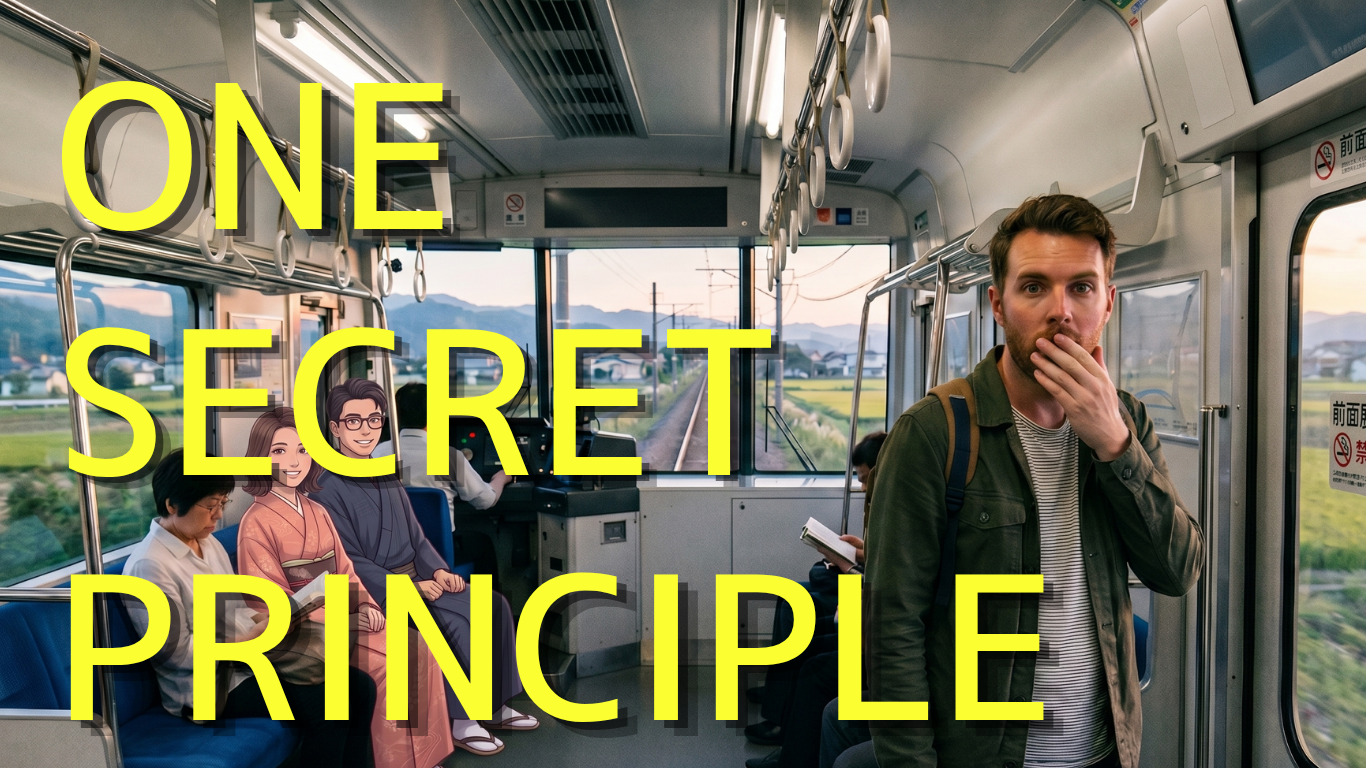
Public transportation is one of the most important places to understand meiwaku.
Trains and buses in Japan can be very crowded, especially in big cities. Because many people are sharing a small space, even small actions can affect others.
Common examples of meiwaku on trains and buses include:
- talking loudly on the phone
- playing videos or music without headphones
- blocking doors with large luggage
- taking up extra seats with bags
- standing in the way when people are trying to get off
- eating strong-smelling food in a crowded train
A simple rule is:
try to make yourself and your belongings take up as little space as reasonably possible.
You do not need to be nervous. Just lower your voice, keep your phone quiet, and be aware of the people around you.
2. At Restaurants and Cafés
Restaurants in Japan are often small, and popular places may have people waiting outside. Because of that, being aware of time, space, and cleanliness can be important.
Actions that may feel normal in another country can sometimes be seen as meiwaku in Japan.
For example:
| Situation | Why It May Be Seen as Meiwaku |
|---|---|
| Staying very long after finishing your meal when people are waiting | It may slow down the restaurant and make others wait longer |
| Leaving the table very messy | Staff may need extra time to clean it |
| Ignoring the line or waiting system | It can feel unfair to other customers |
| Speaking very loudly in a small restaurant | Other guests may feel uncomfortable |
| Bringing outside food or drinks without permission | Some restaurants do not allow it |
This does not mean you need to rush every meal. It simply means that in smaller or busy places, it helps to be aware of the restaurant’s flow.
If the restaurant is quiet and empty, relaxing longer may be fine.
If there is a long line outside, finishing up smoothly is usually more considerate.
3. At Tourist Spots
Tourist spots are places where meiwaku can easily happen without bad intentions.
Many visitors want to take beautiful photos, enjoy famous locations, and capture special memories. That is completely understandable.
But popular places in Japan can become very crowded, and many of them are also part of local people’s daily lives.
Examples of meiwaku at tourist spots include:
- blocking a street or pathway to take photos
- stopping suddenly in a crowded area
- entering private property for a better photo angle
- touching cultural objects, decorations, or displays without permission
- taking photos of local people too closely
- leaving trash behind
- speaking loudly in quiet temples, shrines, or residential areas
The key is not to stop enjoying yourself.
The key is to enjoy the place while still leaving space for others.
Before taking a photo, it helps to ask yourself:
- Am I blocking someone’s way?
- Is this a private area?
- Is this place supposed to be quiet?
- Would I feel uncomfortable if someone did this near my home?
These small checks can prevent many awkward situations.
4. In Residential Neighborhoods
Some popular areas in Japan are not only tourist destinations. They are also real neighborhoods where people live, work, raise children, and go about their everyday lives.
This is especially important in places with narrow streets, traditional houses, small local shops, or famous photo spots.
In residential areas, meiwaku can include:
- talking loudly at night
- standing in front of someone’s home for photos
- entering private alleys, gardens, or driveways
- leaving trash near vending machines or on the street
- smoking in places where it is not allowed
- blocking local traffic or sidewalks
For visitors, the best mindset is:
“I am not just visiting a tourist spot. I am entering someone’s daily environment.”
That one thought can completely change how you move through the area.
5. When Handling Trash
Trash is one of the most confusing parts of traveling in Japan.
Many visitors are surprised by how few public trash cans there are. At the same time, Japan is known for clean streets. This can feel confusing at first.
The important point is that in Japan, people often take personal responsibility for their own trash.
Examples of meiwaku related to trash include:
- leaving trash on benches, sidewalks, or station platforms
- putting household-style trash into a convenience store bin
- throwing bottles, cans, and food waste into the wrong place
- leaving trash near a full trash can
- abandoning umbrellas, suitcases, or large items
A useful habit is to carry a small plastic bag for your own trash during the day.
Then you can throw it away later at your hotel, at a convenience store bin when appropriate, or in a proper public bin if you find one.
6. When Using Phones and Cameras
Phones and cameras are part of travel, but they can also create meiwaku if they affect other people’s privacy or movement.
Be careful when:
- filming in crowded trains or buses
- taking photos inside restaurants or shops without checking
- recording staff or local people without permission
- using a selfie stick in a crowded area
- stopping in the middle of a path to check your phone
- using your phone loudly in quiet spaces
In Japan, privacy and public comfort are often taken seriously.
So even if something looks interesting, it is better to pause and think before filming.
A Simple Way to Think About It
You do not need to memorize every possible situation.
Instead, when you are in Japan, try asking yourself these three questions:
| Question | Why It Helps |
|---|---|
| Am I blocking someone? | This helps you avoid disturbing movement |
| Am I being louder than the people around me? | This helps you match the atmosphere |
| Am I leaving something for someone else to deal with? | This helps you avoid creating extra work |
If you can answer these questions honestly, you will avoid most common forms of meiwaku.
The goal is not to act perfectly.
The goal is to notice the people around you and make small adjustments when needed.
That is often enough to make your stay in Japan smoother, more respectful, and more comfortable.
Is Japan Too Strict About Manners?
If you are visiting Japan for the first time, it may sometimes feel like there are too many rules.
- Be quiet on the train.
- Stand on the correct side of the escalator.
- Do not eat while walking in some places.
- Sort your trash properly.
- Take off your shoes in certain spaces.
- Do not block the street when taking photos.
At first, this can feel overwhelming.
You may even wonder, “Is Japan too strict about manners?”
The honest answer is:
it can feel strict, especially when the rules are not clearly explained.
Many Japanese manners are not written down in one simple list. Some are posted on signs, but many are learned by watching others. Japanese people often grow up absorbing these habits naturally, so they may not always realize how confusing they can be for visitors.
For travelers, this can create a gap.
| What visitors may feel | What may be happening in Japan |
|---|---|
| “There are too many hidden rules.” | Many manners are based on shared habits rather than written instructions. |
| “I am afraid of making a mistake.” | Most people do not expect visitors to be perfect. |
| “Why does everyone seem so quiet?” | People are trying not to disturb others in shared spaces. |
| “Why didn’t anyone tell me directly?” | Some people avoid direct confrontation and expect others to notice the situation. |
So yes, Japanese manners can feel strict from the outside.
But in many cases, the purpose is not to control people.
The purpose is to make shared spaces easier for everyone to use.
Japan has many places where people live very close to each other:
- crowded trains
- small restaurants
- narrow streets
- apartment buildings with thin walls
- quiet residential neighborhoods
- busy tourist areas used by both locals and visitors
In these environments, small actions can have a bigger impact than you might expect.
A loud phone call on a train may disturb dozens of people.
Blocking a narrow street for a photo may stop local residents from passing.
Leaving trash behind may create work for someone else.
Speaking loudly late at night may disturb people who live nearby.
This is why meiwaku matters.
Still, it is important to say this clearly:
you do not need to be perfect in Japan.
Most Japanese people understand that visitors may not know every local custom. A small mistake is usually not a disaster. What matters most is your attitude.
If you notice the situation and try to adjust, that effort is often appreciated.
For example:
- If you accidentally stand in the wrong place, just move when you notice.
- If you are unsure where to throw away trash, keep it with you until you find the right place.
- If you realize you are speaking louder than others, lower your voice a little.
- If you block someone’s way, simply step aside and say “sorry” or “sumimasen.”
These small actions show consideration.
So instead of thinking, “Japan has too many rules,” it may help to think:
“Japan has many shared spaces, so small acts of consideration matter.”
That mindset makes Japanese manners much easier to understand.
The goal is not to make visitors feel nervous.
The goal is to help you feel more confident.
Once you understand the reason behind the manners, Japan does not feel like a place full of invisible rules. It starts to feel like a place where people are quietly trying to make daily life smoother for everyone.
And when you join that effort, even in small ways, you are already doing very well.
The Simple Rule: Look Around Before You Act
If you are not sure what to do in Japan, there is one simple rule that can help:
This does not mean you need to copy everything perfectly. It simply means taking a moment to notice the situation before deciding what to do.
In Japan, many manners are based on context. The “right” behavior may change depending on the place, the time, and the people around you.
For example, eating a snack may be completely fine in one place, but not appropriate in another. Talking with friends may be normal in a casual restaurant, but too loud on a quiet train. Taking photos may be welcome at a tourist spot, but uncomfortable in a residential street.
So instead of trying to memorize every rule, try observing first.
Ask yourself:
- What are people around me doing?
- Is this place quiet or lively?
- Are people walking smoothly, or am I blocking the way?
- Is there a line or waiting system?
- Are there signs explaining what to do?
- Would my action make extra work for someone else?
This small pause can prevent many common mistakes.
Here are a few practical examples:
| Situation | Before You Act, Look For… | Better Action |
|---|---|---|
| You want to take a photo | Are people trying to pass behind you? | Move to the side and take the photo quickly |
| You want to throw away trash | Is the bin for bottles, cans, burnable trash, or something else? | Check the label before throwing it away |
| You enter a small restaurant | Are people waiting? Is there a ticket machine? | Follow the line or ask staff politely |
| You are on a train | Is everyone quiet? Is your bag taking space? | Lower your voice and keep your bag close |
| You visit a shrine or temple | Are people praying quietly? Are photos allowed? | Stay calm, speak softly, and check signs |
This habit is especially useful because Japan often relies on quiet signals.
- A line may not always look obvious.
- A “do not enter” area may be marked only by a small rope.
- A trash bin may have several separate openings.
- A restaurant may expect you to buy a meal ticket before sitting down.
If you rush, you may miss these signals.
But if you pause for just a few seconds, things often become much clearer.
And if you still do not know what to do, it is okay to ask.
Simple phrases can help:
- “Sumimasen.” — Excuse me / Sorry.
- “Is this okay?”
- “Where should I line up?”
- “Can I take photos here?”
- “Where can I throw this away?”
You do not need perfect Japanese. Even a short question, a gesture, or a polite tone can show that you are trying to be considerate.
The most important thing is not perfection. It is awareness.
When you look around before you act, you show respect for the people sharing the space with you. You also reduce your own stress, because you are not guessing blindly.
In many situations, this simple habit will help you avoid causing meiwaku.
So when you are in Japan and feel unsure, remember this:
That small moment of awareness can make your trip smoother, calmer, and much more comfortable.
You Don’t Need to Be Perfect
After reading about meiwaku, you may feel a little worried.
You may think:
- “What if I make a mistake?”
- “What if I do something rude without knowing?”
- “What if people judge me?”
- “Do I need to understand every Japanese rule before I visit?”
The answer is simple:
no, you do not need to be perfect.
Japan has many customs, and even Japanese people do not always follow every rule perfectly in every situation. Visitors are not expected to know everything from the beginning.
What matters most is not perfection.
What matters is your attitude.
If you are trying to be respectful, observant, and considerate, that already makes a big difference.
For example:
| If this happens… | What you can do |
|---|---|
| You accidentally stand in the wrong place | Move when you notice |
| You speak too loudly without realizing it | Lower your voice a little |
| You are not sure where to throw away trash | Keep it with you until you find the right place |
| You block someone’s way while taking a photo | Step aside and say “sorry” or “sumimasen” |
| You do not understand a local rule | Watch others, check signs, or politely ask |
Small adjustments are usually enough.
In many cases, people will understand that you are a visitor. A small mistake does not mean you have failed. It simply means you are learning how things work in a new place.
The idea of meiwaku is not meant to make you nervous. It is meant to give you a helpful compass.
Instead of memorizing hundreds of rules, you can remember one basic idea:
Try not to make things harder for the people around you.
That is already a strong start.
And if you make a mistake, respond with humility and awareness. A simple “sorry,” a small bow, or a quick adjustment can communicate a lot.
Japan is not asking you to become Japanese.
It is not asking you to hide your personality.
And it is not asking you to travel in fear.
The real goal is much simpler:
- notice the people around you
- respect shared spaces
- adjust when needed
- enjoy your trip with confidence
When you understand meiwaku, you begin to see Japanese manners in a different way. They are not just a long list of invisible rules. They are small actions that help people live, move, work, and travel together more smoothly.
So do not worry about being perfect.
That is more than enough to help you feel welcome, comfortable, and confident during your stay in Japan.
Watch the Full Video
Understanding meiwaku can make your trip to Japan much easier.
It helps you understand why people act quietly in certain places, why shared spaces are treated with care, and why small actions can matter so much in daily life.
But this idea is easier to remember when you hear it explained through real examples.
In the video below, Shohei and Mio explain the meaning of meiwaku in a calm and beginner-friendly way. They talk about why this idea matters in Japan, how it appears in everyday situations, and how visitors can use it without feeling nervous or judged.
If you are planning your first trip to Japan, this video will help you understand:
- what meiwaku really means
- why Japanese people care about not disturbing others
- how to act more confidently in public spaces
- what to do when you are unsure about Japanese manners
- why you do not need to be perfect to be respectful
The goal is not to make you worry about every small mistake.
The goal is to help you feel more comfortable, more confident, and more welcomed during your stay in Japan.
Watch the full video here:
Why Japanese People Respect This One Principle Above All Else
If you found this helpful, you can also explore more guides from Smooth Stay Japan 101 to learn about Japan’s everyday rules, manners, and cultural background before your trip.
FAQ
===
If you have questions or want to share your experience, please leave a comment on the YouTube video. We read the comments and may use common questions for future guides.
Need More Help Planning Your Japan Trip?
We have collected useful official links, travel resources, and booking options for first-time visitors to Japan.
Use this page when you want quick access to trusted resources before or during your stay.
Japan can feel easier to navigate when you know where to find reliable information.
Our Useful Links page gathers practical resources for visitors.
\ For a Smoother Stay in Japan /