Japan is famous for being clean.
Many first-time visitors notice it almost immediately: train stations are tidy, streets are usually well maintained, and even busy tourist areas can feel surprisingly orderly.
But then something confusing happens.
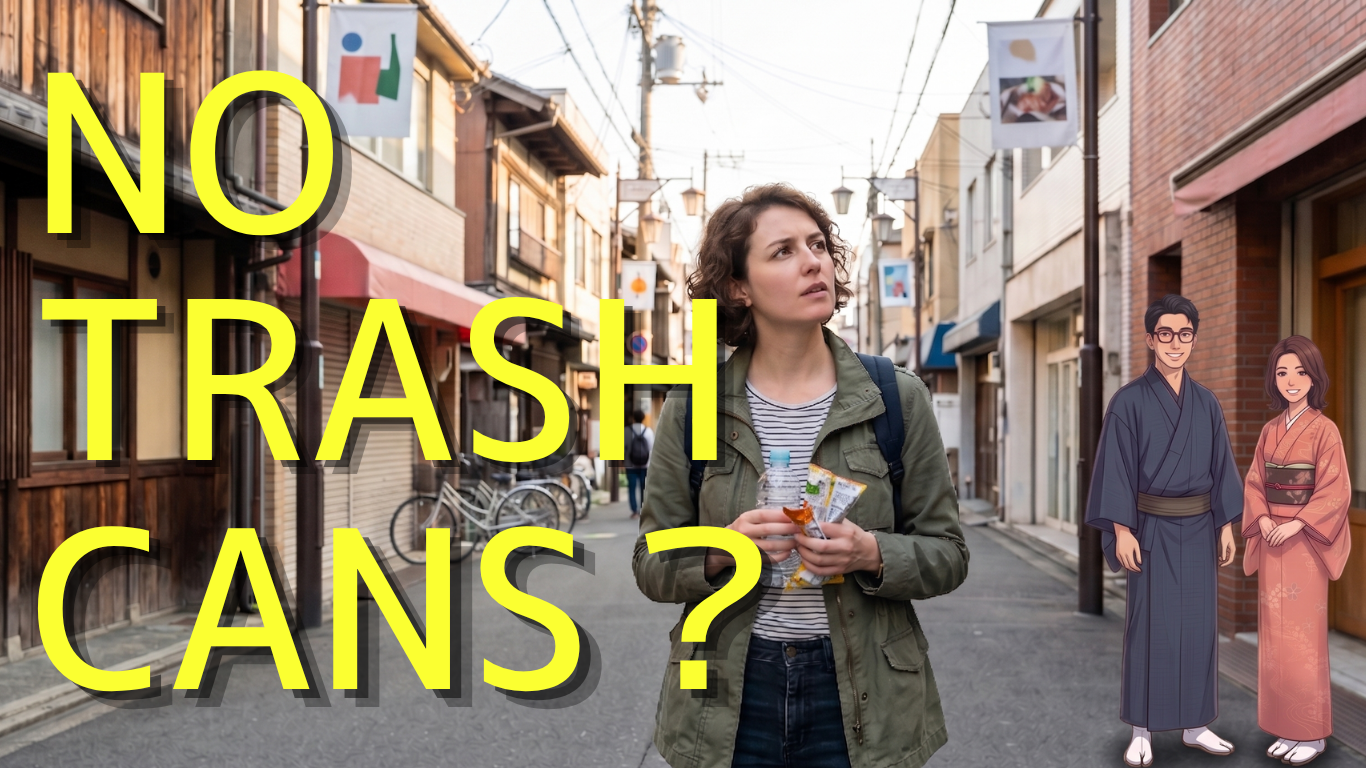
You finish a drink, eat a snack, or unwrap something you bought at a convenience store — and you start looking for a trash can.
And you keep looking.
And somehow, there is no trash can nearby.
If this happens to you, you are not alone. Many visitors to Japan are surprised by how few public trash cans there are, especially compared with many other countries.
This article is not here to scold you or make you nervous.
The goal is simple: to help you understand why trash cans can be hard to find in Japan, what Japanese people often expect in public spaces, and what you can do with your trash while traveling.
Knowing this can make your stay smoother, help you avoid awkward situations, and let you enjoy Japan with more confidence.
Watch the Full Video
If you prefer to learn this topic through a calm, podcast-style conversation, you can watch the full video here:
In the video, Shohei and Mio explain why Japan has a “trash problem” from a visitor’s point of view, why this issue matters for local communities, and what simple actions can help you travel more comfortably.
Main Point Summary
Here are the key points:
- Public trash cans can be surprisingly hard to find in Japan.
- This does not mean you are expected to magically know everything.
- A simple habit is to carry a small plastic bag or pouch for your own trash.
- When you find a trash can, use it only for appropriate items and follow the sorting rules.
- Convenience store, station, and facility trash cans are not always “public” in the same way visitors may expect.
- You do not need to be perfect. Just being prepared and respectful makes a big difference.
Why Japan Has So Few Public Trash Cans
For many visitors, the confusing part is this:
Japan is very clean, but public trash cans are not everywhere.
This feels contradictory at first. In some countries, a clean public space usually means there are many trash cans. In Japan, however, cleanliness often depends more on personal responsibility, facility management, and local habits.
In many places, people are used to carrying their own trash until they can dispose of it properly. This is especially common when someone buys food or drinks while walking around. Instead of expecting a trash can on every street corner, people often keep the wrapper, bottle, or small trash with them.
There are also practical reasons. Trash cans require collection, cleaning, sorting, and maintenance. If a trash can is placed in a busy tourist area, it can overflow quickly. That creates more work for local staff and can make the area dirtier instead of cleaner.
So the issue is not simply “Japan has no trash cans.” A better way to understand it is:
Japan often expects trash to be handled at the source, at a facility, or by the person who created it.
This is why the system can feel smooth for people who already know it, but confusing for visitors who are experiencing it for the first time.
What Tourists Should Do With Trash in Japan
The best strategy is simple:
Prepare before you need a trash can.
This does not mean carrying a giant garbage bag around Tokyo. It just means having a small way to hold your own trash for a while.
Carry a Small Trash Bag
Before going out for the day, put a small plastic bag, reusable pouch, or zip bag in your backpack or pocket.
You can use it for:
- snack wrappers
- tissues
- receipts
- small packaging
- empty plastic bottles until you find the right bin
- small items you do not want to leave loose in your bag
This one habit solves most of the stress.
You may not need it every day, but when you do need it, you will be very glad you have it.
Use Trash Cans Respectfully When You Find Them
You may find trash cans in places such as:
- train stations
- airports
- shopping malls
- convenience stores
- tourist facilities
- parks
- event venues
- near vending machines for bottles and cans
But there is an important point:
Not every trash can is meant for every kind of trash.
For example, a recycling bin near a vending machine may be only for bottles and cans bought from that area. A convenience store trash can may be intended for customers, not for large amounts of outside trash. Some locations may remove trash cans entirely during busy periods.
When you find a trash can, take a moment to look at the labels or pictures.
Common categories include:
- burnable trash
- plastic bottles
- cans
- glass bottles
- paper
- plastic packaging
Even if you cannot read Japanese, pictures and icons often help.
A simple rule is:
When you are not sure, do not force it. Keep the item with you until you find a clearer place to throw it away.
Common Situations Visitors May Face
Here are some common travel situations and what you can do.
| Situation | What You Can Do |
|---|---|
| You finish a drink from a vending machine | Look for a bottle/can recycling bin nearby. If there is none, keep it in your bag until later. |
| You eat a snack while walking | Put the wrapper in your small trash bag. Dispose of it later at your hotel or an appropriate bin. |
| You buy food at a convenience store | If you eat near the store and there is a trash can, use it respectfully. Do not bring large outside trash. |
| You are in a tourist area with no trash cans | Carry the trash with you. Many visitors experience this, so it is normal. |
| You are not sure how to sort something | Look for pictures, ask staff if available, or keep it until you can dispose of it more clearly. |
| Your hotel room has a trash bin | Use it for ordinary small travel trash. For unusual or large items, ask the hotel staff. |
Why This Matters in Japan
Trash rules in Japan are not only about cleanliness.
They are also connected to how people share public space.
In many Japanese communities, cleanliness is maintained through small actions by many people: residents, shop staff, station workers, local volunteers, and visitors. In busy tourist areas, the number of people can increase very quickly, but the number of local workers or volunteers does not always increase at the same speed.
That is why small actions from visitors matter.
Carrying your own trash for a while may seem like a tiny thing. But in a crowded area, if thousands of people do that, it helps keep the space comfortable for everyone.
This is not about blaming travelers.
In fact, many visitors want to do the right thing. The problem is often that the rule is not obvious. If there is no sign, no trash can, and no explanation, it is easy to feel confused.
So instead of thinking, “I don’t understand this country,” try thinking:
“This is one of Japan’s local systems. Once I know how it works, it becomes much easier.”
What You Don’t Need to Worry About
You do not need to be perfect.
You do not need to understand every local trash rule in Japan before your first trip. Even Japanese residents sometimes need to check sorting rules when they move to a new city.
The important thing is your attitude and your basic actions.
If you:
- avoid littering
- carry small trash when needed
- use bins only when appropriate
- follow signs as much as you can
- ask staff politely when unsure
you are already doing well.
Most people do not expect visitors to know every detail. But they do appreciate it when visitors try to respect shared spaces.
Simple Phrases You Can Use
If you need help, these simple phrases may be useful.
| English | Simple Japanese |
|---|---|
| Where is the trash can? | Gomi-bako wa doko desu ka? |
| Can I throw this away here? | Kore o koko ni sutete mo ii desu ka? |
| Is this for plastic bottles? | Kore wa PET bottle desu ka? |
| Thank you. | Arigatou gozaimasu. |
You do not have to pronounce everything perfectly. A calm tone, a small gesture, and the item in your hand will usually help people understand what you mean.
FAQ
A Simple Rule: Carry It Until You Can Dispose of It Properly
The easiest rule for visitors is:
If you cannot find the right trash can, carry your trash a little longer.
This may feel inconvenient at first, but it quickly becomes normal. A small bag in your backpack can remove most of the stress.
And there is a positive side: this habit helps you move through Japan more smoothly. You will spend less time worrying, less time searching, and more time enjoying your trip.
You do not need to be perfect
Japan’s lack of public trash cans can be surprising, especially because the country is known for being clean.
But once you understand the system, it becomes much easier to handle.
You do not need to be perfect.
You just need a simple plan:
Carry a small trash bag, use trash cans respectfully when you find them, follow sorting signs when possible, and avoid leaving trash behind.
This small habit helps keep Japan comfortable for residents, workers, and other visitors — and it helps you feel more confident during your stay.
If this guide helped you, watch the full video here:
And subscribe to Smooth Stay Japan 101 for more practical, respectful guides to Japan’s everyday rules, manners, and cultural background.
Need More Help Planning Your Japan Trip?

We have collected useful official links, travel resources, and booking options for first-time visitors to Japan.
Use this page when you want quick access to trusted resources before or during your stay.
Japan can feel easier to navigate when you know where to find reliable information.
Our Useful Links page gathers practical resources for visitors.
\ For a Smoother Stay in Japan /