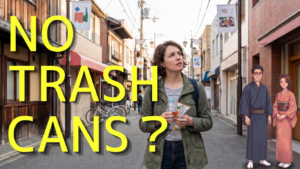

Traveling in Japan can be exciting, beautiful, and surprisingly smooth — even if you don’t speak a word of Japanese.
But there’s one situation that makes many first-time visitors uneasy:
What do I do when English just doesn’t work?
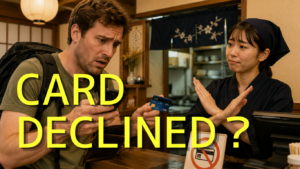
Maybe you’re at a small local restaurant and the staff can’t quite explain the menu in English. Maybe you’re standing at a train station, staring at the signs, unsure which platform to head to. Or maybe you’ve checked into your hotel, shown your booking confirmation, and still left the front desk wondering if everything went okay.
If that sounds familiar — you’re not alone, and there’s no need to worry.
Most people in Japan study English at school, but that doesn’t automatically mean every staff member feels comfortable speaking it in a real-life, face-to-face situation. In smaller local restaurants, family-run shops, rural areas, and busy transit hubs, many people may understand some English but feel hesitant when it comes to actually replying. A little nervousness on their end is completely normal.
That doesn’t mean you aren’t welcome.
It just means both sides might need a slower, simpler way to connect.
In this guide, you’ll find practical, low-stress ways to handle communication in Japan when English doesn’t flow as smoothly as you’d hoped. The goal isn’t perfect Japanese — not even close. The goal is simply this: help both you and the person you’re talking to understand each other, without either of you feeling flustered.
Watch the Full Video
Prefer to learn through conversation? You can watch the full video right here:
In the video, Shohei and Mio walk you through why English doesn’t always work smoothly in Japan, how to navigate those moments without stress, and the simple, practical steps that make communication easier for everyone.
Main Point Summary
Here are the key things to keep in mind:
- Keep your English short and simple.
- Ask one question at a time.
- Show your phone screen — a map, booking confirmation, or photo goes a long way.
- Use a translation app when you need a little extra help.
- Pointing is perfectly fine when done calmly and politely.
- Learn a few basic Japanese phrases before your trip.
- “Sumimasen” (excuse me) and “arigatou gozaimasu” (thank you) will take you further than you might expect.
- Stay calm. Most communication hiccups are nobody’s fault — they’re just part of the experience.
You don’t need perfect Japanese to travel comfortably in Japan. A few small, thoughtful habits can make the whole journey feel a lot smoother — for you and for the people you meet along the way.
Why English May Not Always Work in Japan
This is something that surprises a lot of first-time visitors.
Japan is modern, well-organized, and used to welcoming international visitors. Trains run on time. Convenience stores are open around the clock. Cities like Tokyo, Osaka, and Kyoto welcome huge numbers of international travelers.
So it’s completely natural to assume that English will work just about anywhere.
And in many places, it does. Major hotels, international airports, tourist information centers, and large stations often have English support readily available.
But in everyday settings — small local restaurants, neighborhood train stations, pharmacies, taxis, clinics, and rural areas — English may be more limited than you’d expect.
There are a few reasons for this, and none of them are about being unwelcoming.
First, most people in Japan study English at school, but the focus often tends to be on reading, grammar, and exam preparation. Jumping into a real-time conversation with a traveler is a very different kind of challenge — one that even people with some English knowledge may find nerve-wracking.
Second, Japanese service culture places a high value on accuracy and care. Some staff may hold back from speaking English not because they don’t want to help, but because they’re worried about accidentally giving you the wrong information. That hesitation often comes from wanting to be careful, not from a lack of kindness.
Third, many service environments are simply busy. A restaurant server or station attendant may genuinely want to assist you, but a lengthy back-and-forth in English just isn’t always possible in the moment.
This is why short, clear communication works so much better than long explanations.
Instead of saying:
“I’m trying to get to this station, but I’m not sure if this train is the right one, and I also need to know whether I should transfer before or after Shinjuku.”
Try:
Then show your map.
That one small shift can make the whole interaction easier — for both of you.
Common Situations Where English May Not Work Smoothly
Here are some everyday situations you might come across in Japan — along with simple ways to handle them.
| Situation | What may happen | What you can do |
|---|---|---|
| Restaurant | Staff may not be able to explain the menu in English | Show a photo of the dish, point to the menu, or use a translation app |
| Train station | Route or platform information can feel overwhelming | Show your destination on a map or on your phone screen |
| Hotel or ryokan | Check-in details may be difficult to communicate verbally | Show your booking confirmation screen |
| Shop or pharmacy | Product details or ingredients may not be clear | Show a photo of what you’re looking for |
| Taxi | The driver may have difficulty understanding English pronunciation | Show the destination address in Japanese |
| Local or rural area | English signage may be limited | Look up and save key locations on your phone in advance |
The key is to take the guesswork out of the situation.
When you show a screen, photo, address, or map, the person you’re talking to doesn’t need to catch every word you’re saying. They can understand what you need just by looking — and that makes things so much easier for both of you.
This is especially true in Japan, where written information — maps, train tickets, reservation screens, and written addresses — tends to be clear, detailed, and very useful.
For taxis especially, a Japanese address is usually more helpful than a Romanized version of the place name.
What To Do When English Doesn’t Work
1. Keep your words short
Use simple words and short sentences. Less really is more.
Instead of:
“Could you tell me whether this train goes directly to Kyoto, or do I need to transfer somewhere?”
Try:
Or:
Short English isn’t rude — in these moments, it’s actually the kindest thing you can do for the person trying to help you.
2. Ask one question at a time
A lot of communication breakdowns happen simply because the question is too long. Start with one thing, wait for the answer, then move to the next.
For example:
Once you understand the answer:
Taking it one step at a time is much easier for everyone involved.
3. Show your screen
Your phone may be your single most useful communication tool in Japan.
You can show:
- Google Maps
- A photo of a restaurant or dish
- A hotel booking confirmation
- A train route
- A product image
- A Japanese address
- A translation app screen
When you hold up your screen, keep it steady and give the other person a moment to read it comfortably. A small, patient pause can go a long way.
4. Use translation apps — and keep your input simple
Translation apps are genuinely powerful, but they work best when you give them clean, simple sentences to work with.
Instead of typing:
“I’m allergic to several kinds of seafood, and I was wondering whether this dish might contain fish broth, bonito flakes, or shrimp powder.”
Try:
Simpler input almost always produces better, more reliable output.
5. Use polite body language
In Japan, how you say something often matters just as much as what you say.
You don’t need to bow perfectly. But a calm voice, a small nod, and a quiet “sumimasen” before you ask can set a warm, respectful tone for the whole interaction.
Here are a few phrases worth keeping on your phone:
| English | Japanese |
|---|---|
| Excuse me / Sorry to bother you | Sumimasen (すみません) |
| Thank you very much | Arigatou gozaimasu (ありがとうございます) |
| I don’t understand Japanese | Nihongo ga wakarimasen (日本語がわかりません) |
| Is this okay? | Kore de daijoubu desu ka? (これで大丈夫ですか?) |
| Where is this place? | Koko wa doko desu ka? (ここはどこですか?) |
| Please | Onegai shimasu (お願いします) |
Your pronunciation doesn’t need to be perfect. The effort alone is usually appreciated.
What To Avoid When Communication Gets Tricky
When a conversation hits a wall, it’s completely natural to feel a little flustered or frustrated. That’s a very human reaction.
That said, a few common responses tend to make things harder rather than easier:
- Speaking louder or faster
- Repeating the same long sentence again
- Using slang, idioms, or humor that may not translate well
- Asking several questions at once
- Showing visible frustration
- Assuming the other person is ignoring you or doesn’t want to help
Here’s the thing: if English isn’t landing, louder English rarely solves the problem.
What usually does help is this — pause, take a breath, and soften your tone. Then shorten your words, show your screen, and try again.
In many cases, the person across from you wants to help. They may just be feeling a little nervous, caught off guard, busy, or unsure of the best way to respond in English. A moment of patience from your side can make a real difference.
Simple Phrases You Can Actually Use in Japan
You don’t need to memorize a phrasebook. Here are some practical, ready-to-use patterns for the most common situations you’ll encounter on your trip.
At a restaurant
- “English menu?”
- “This one, please.”
(point to the menu or a photo) - “No meat, please.”
- “Card okay?” or “Can I pay by card?”
At a train station
- “Shinjuku? This train?”
- “Platform 2 — where?”
- “Transfer?”
- “This way?”
(with a gesture in the direction you’re heading)
At a hotel
- “I have a reservation.”
(show your booking screen) - “Check-in, please.”
- “Can I leave my luggage here?”
At a shop or pharmacy
- “I’m looking for this.”
(show a photo) - “Do you have this?”
- “For headache.”
- “For stomach pain.”
- “Is this okay to use?”
For medicine or health-related questions, use a translation app if you need to explain symptoms more clearly.
None of these are textbook English — and that’s exactly the point. They’re designed for real moments, not perfect grammar. Clear, short, and friendly is all you need.
Why This Approach Helps Everyone — Not Just You
The communication habits covered in this guide aren’t just about making your own trip run more smoothly.
They also make things easier for the person on the other side of the counter, too.
When you speak slowly, keep your sentences short, show your screen, and ask one thing at a time, you take the pressure off. The staff member doesn’t have to work through a long English explanation. They can focus on one clear, manageable request — and actually help you.
That small shift creates a better experience for everyone in the room.
For you as a visitor, it means less anxiety and more confidence.
For local staff, it means they can assist you more easily and with less pressure.
And for both of you, it helps avoid the kind of small miscommunications that can leave everyone feeling a little deflated.
Japan is known for politeness and thoughtful service — but even the most organized travel experience comes with the occasional moment of confusion. That’s just part of being somewhere new.
The goal isn’t to avoid every awkward moment.
The goal is to have a calm, simple approach ready for when one comes along.
Conclusion
So, what do you do when English doesn’t quite work in Japan?
Keep it short.
Show your screen.
Use a translation tool.
Ask one thing at a time.
And say thank you.
If someone doesn’t catch what you’re saying, that isn’t a sign that you’re not welcome. More often than not, both of you are simply doing your best in an unfamiliar situation — and that’s something worth respecting on both sides.
You don’t need perfect Japanese to have a wonderful time in Japan. You just need a calm, simple way to meet people halfway.
English may not always work perfectly.
But a calm, respectful approach can.
We’d Love to Hear From You
If you’re planning your first trip to Japan, which situation makes you most nervous?
Restaurants? Trains? Hotels? Shopping? Something else entirely?
Watch the full video and let us know in the comments. Shohei and Mio would genuinely love to hear what you’re wondering about — and what you’d like them to cover next.
Need More Help Planning Your Japan Trip?
We have collected useful official links, travel resources, and booking options for first-time visitors to Japan.
Use this page when you want quick access to trusted resources before or during your stay.
Japan can feel easier to navigate when you know where to find reliable information.
Our Useful Links page gathers practical resources for visitors.
\ For a Smoother Stay in Japan /